August 4, 2026 NECode AI Conference Software Engineering
NE Code 2026 Recap
It was another great year attending Nebraska.Code . I’ve been attending Nebraska.Code() (and HDC before that) off and on for a long time and have always enjoyed the speakers, topics, and meeting other professionals. The theme, “Rise of the Machines” captured AI’s impact on the technology industry. There were excellent sessions on our role as engineers, how to work alongside new technology, and introductions to platforms.
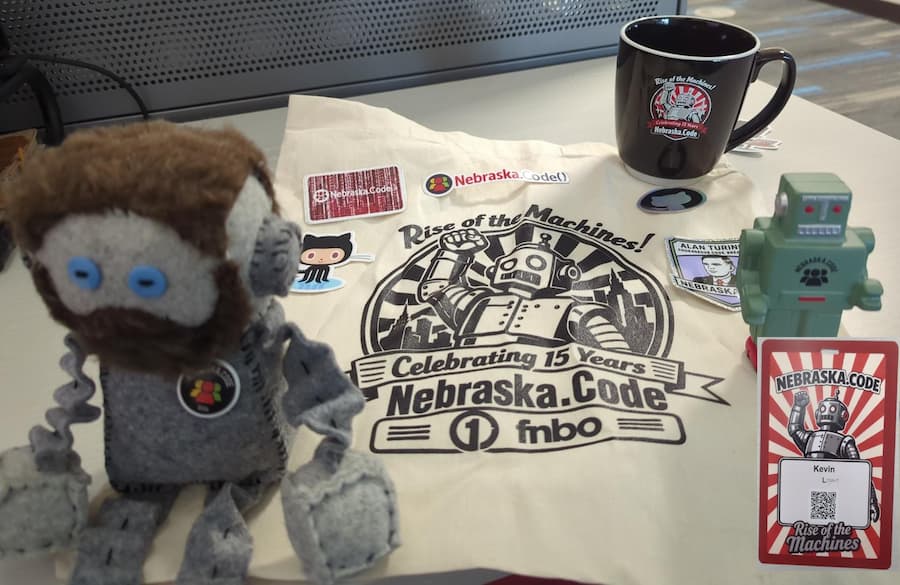
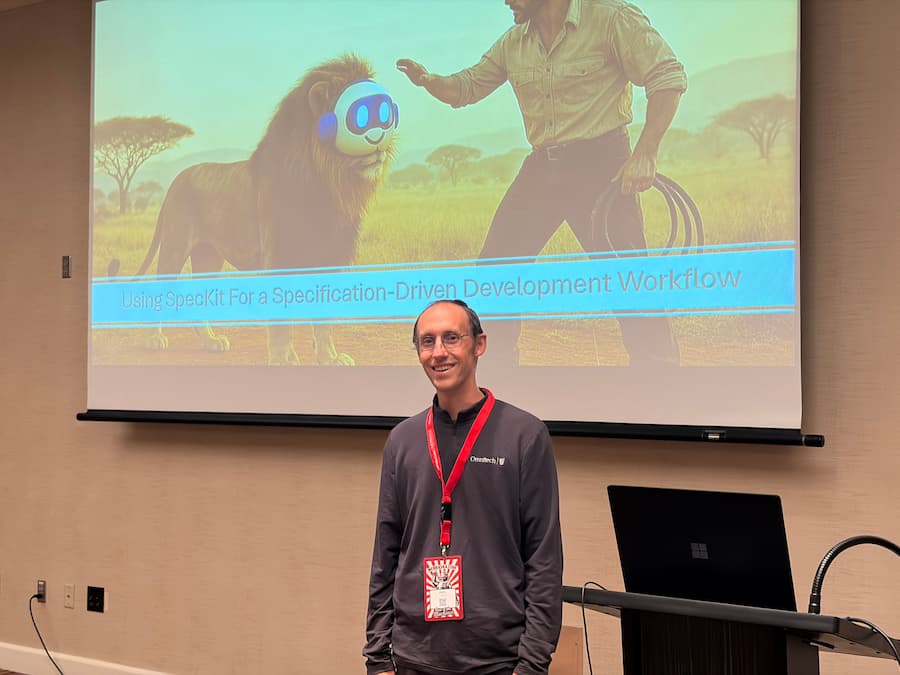
I had the honor and privilege of presenting this year. That also meant I got to bring my wife along (she enjoyed time in the Haymarket and visiting bookshops) and we went to a fun speaker event at the Starlight Lounge. I also got a mug along with a cool individualized gift of a handmade figure based on my profile picture (see it below). My presentation “Using SpecKit and Specification-Driven Development to Tame AI Coding” seemed well received.
I’ve been to many NE Code and HDC conferences going back to 2012. This year, I found myself spending time in conversations at the lunch tables and the booths, then showing up late to the sessions. I met a lot of great people and there were many people at the sponsor booths that I learned from their experiences. There were a lot of sessions that I wished I had been able to go to.
I enjoyed hearing Richard Campbell’s AI history keynote (Dotnet Rocks fame; I even got to say “thank you for coming, I’ve listened to DotNetRocks for a long time”, trying not to be too much of a fan boy, in the meal line). He challenged us all to work toward a future where AI is used for good; we have an opportunity to guide the approach.
I was glad to see a common theme was making guardrails for AI development. One of the common ways was to define work to be done from a specification before generating code. However, we are all learning how to use these tools and managing the costs.
Brian Zimmer from Don’t Panic Labs shared that employee engagement has been stuck at around 30% for 25 years. There are 52% somewhat disengaged and 17% completely disengaged. He challenged us to take advantage of this current AI adoption moment to improve work and lives for humans by reducing drudgery and possibly creating custom roles. I hope to be a part of making things better using these technologies.
(I wrote this for the Omnitech Blog and re-used it here.)
Connections
I found myself talking to meeting people and learning from them. I also tried to stop at the booths and thank the sponsors. This made me late to some sessions, but as I get older interacting is becoming more important that then sessions.
I’m not the best mingler, but the speaker event was a great start where we met Anne and Andrew from Don’t Panic Labs. At a lunch table we talked with other speakers who had the same time slot. It’s interesting how you see them later and it feels like you are friends.
Alexander and I talked several times about Playwright BDD, Righting Software and challenges of building a learning environment on a team. It was great when he flagged me down.
Collin Newberry was at a lunch table and I ended up being 15 minutes late for a session. His DevOps Problem Learned: Stop Worrying book is on my list.
Karthik came to my presentation and asked me for feedback on his company’s codevalid.io product. We are meeting later today.
The Whova app was helpful and the interests to help make connections was interesting. I could have used that more, but I just ran out of energy. I also got to spend time with my wife and visit my Uncle. It was time well spent!
AI - “Automation Needs Boundaries”
Using AI in All Steps of the Software Development Life Cycle
Alvindra Fernando shared how he we using AI in all the steps. Most people are using AI for code generation, but we are missing out on improvement opportunities. Now that code generation is much faster, the new bottlenecks are determining what to build, building it correctly and deciding if it is working correctly and ready for deployment.
His steps are:
Story > Acceptance Criteria > Plan > Refine > Approve > Implement > Review > Test > Merge
I’d add > Deploy > Monitor > Feedback > Repeat —>
graph LR
    A["Story"] --> B["Acceptance Criteria"]
    B --> C["Plan"]
    C --> D["Refine"]
    D --> E["Approve"]
    E --> F["Implement"]
    F --> G["Review"]
    G --> H["Test"]
    H --> I["Merge"]
    I --> J["Deploy"]
    J --> K["Monitor"]
    K --> L["Feedback"]
    L --> A
The Stack
Context (rules, docs conventions), Planning (refine, plan, approve), Execution (agents, model, cloud), Guardrails (permissions, sandboxes, hooks), Validation (types, lint, tests), Review (agents, bots, humans), Reusable Memory (skills, plans, playbooks)
He had made many custom skills and instructions for each level. I appreciated how he put all these ideas together
He shared his slide deck . I’d recommend checking them out and going to one of his talks if you get a chance.
Cory House
Cory House has taught a lot of people about React and now he’s doing the same with AI Development. He has built up experience by helping teams adopt AI for development in this ever changing field. His presentation was packed with people and ideas. I was a bit late, so I sat outside the room and watched through the door until a seat opened up.
He shared his slide deck and it’s another one worth clicking through if you are on a team usiung AI for Development.
My main takeaways
-
AI development usage is like a Trojan horse to teach all the good practices and guard rails
- Teach about AI dev, then help them setup all the other engineering (feedback loops: automated testing, pipelines, validations, AI review etc)
- Build platforms for Engineers to build on top of
-
Validate locally: linting, static analysis, warnings as Errors, etc
-
Use AI for Code Reviews - “if not wasting time”
-
Don’t limit token usage (with reason), give a budget, use one model or system to implement the other to review
-
Plan - work - learn - implement -> repeat
-
Add permanent learning to scripts, linters, components, etc
-
Opportunity: Applying AI to all steps of the Software Development Life Cycle- • “Autonomy needs boundaries”
-
I heard of using Specs in Markdown with OpenSpec or handrolled Markdown instructions in a few different presentations
-
Opportunity to increase employee engagement (stuck at 30% for 25 years)
-
Seems like most everyone is moving forward using AI, based on my survey question, presentations and conversations
-
This is an emergent situation (BVSSH image below)
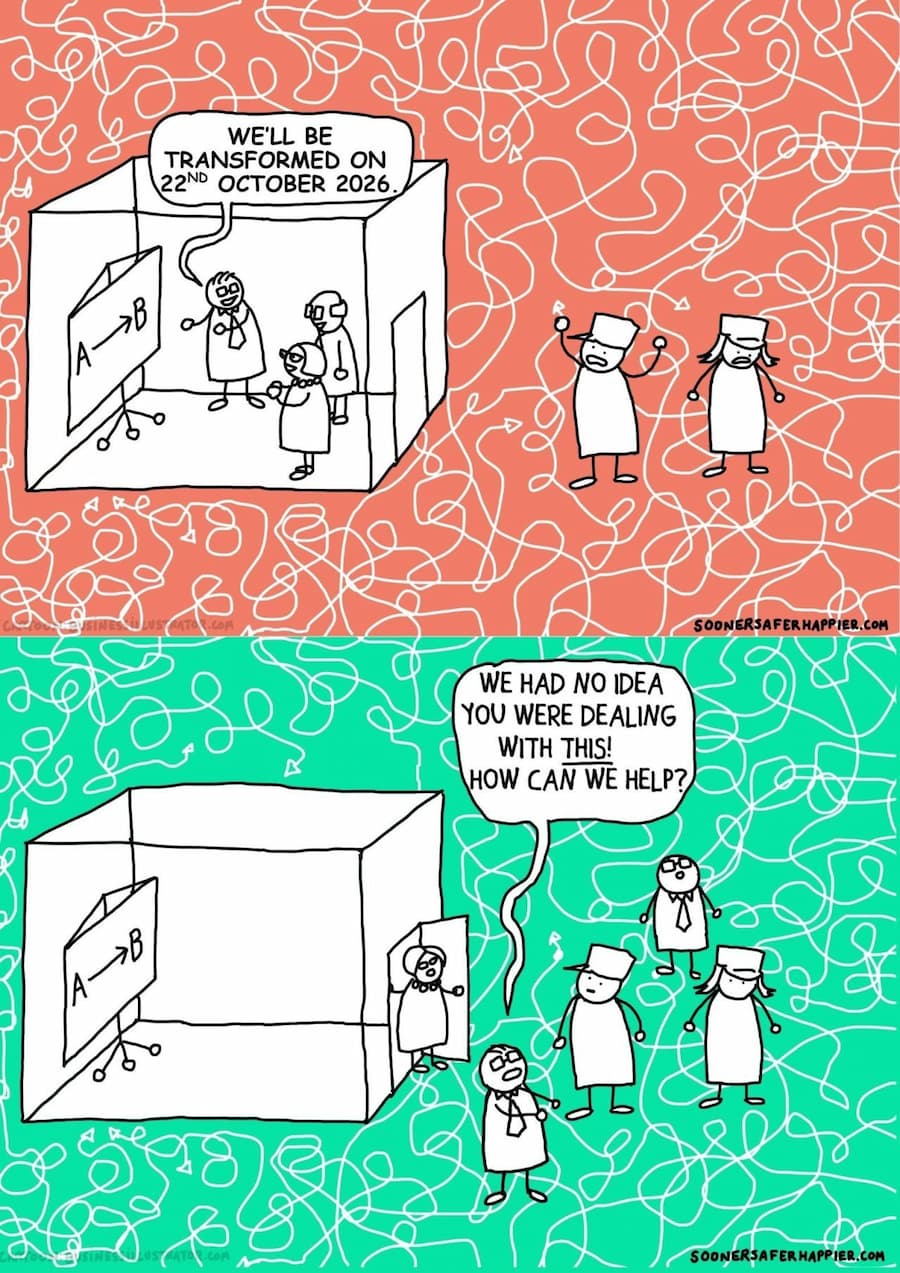 from BVSSH newsletter
 -
Create slack time to experiment, learn and share
-
Compound Engineering
- Plan > Work > Assess > Codify –> repeat
- (make it easier to build with each new feature)
-
Guardrails = feedback loops
-
look into Biome or oxlint/oxfmt, Bun over Node (faster feedback for agents)
Compound Engineering
graph LR
    A["Plan"] --> B["Work"]
    B --> C["Assess"]
    C --> D["Codify"]
    D --> A
Hudl Agentic Engineering
Wow, Hudl has grown! They have 350 engineers now. It was very interesting to see how their Platform team is using Claude to attempt to find the “Golden Path” and make development easier for their engineers. They have deployed a lot more (their sports seasons are cyclical, so were waiting to see if all the deployments create more value) and moving faster. They created a Vector Embedding with context of their microservice code base and are saving a lot of time and tokens. They are experimenting with Agents helping troubleshoot production issues, fix bugs, help with tests, and help humans.
They also talked about needing guardrails for AI and recording learnings into a shared memory.
They’ve recognized that reducing local dev friction is more important than ever with the AI acceleration.
Richard Campbell
As I said above, it’s always great to listen to Richard Campbell. His keynote was a great way to start the conference. Since he’s well know, you can catch his keynote and other talks on YouTube.
Keynote: After the AI Hype – What’s Real, and What’s Next
Data Centers in Space - a classic Richard Campbell geek out. They are possible, but not practical.
Others
Being a Business Analyst: Be curious, the initial question is often not getting to the correct problem or solution
Clarity Keynote: Growth is a strategy, not a race. Know your values and stick to them. Only you can “know what’s yours”. I’d add that we need to seek God and the Bible for Clarity. As Pastor Jayson preached that Sunday , “Being Cornered Brings Clarity”.
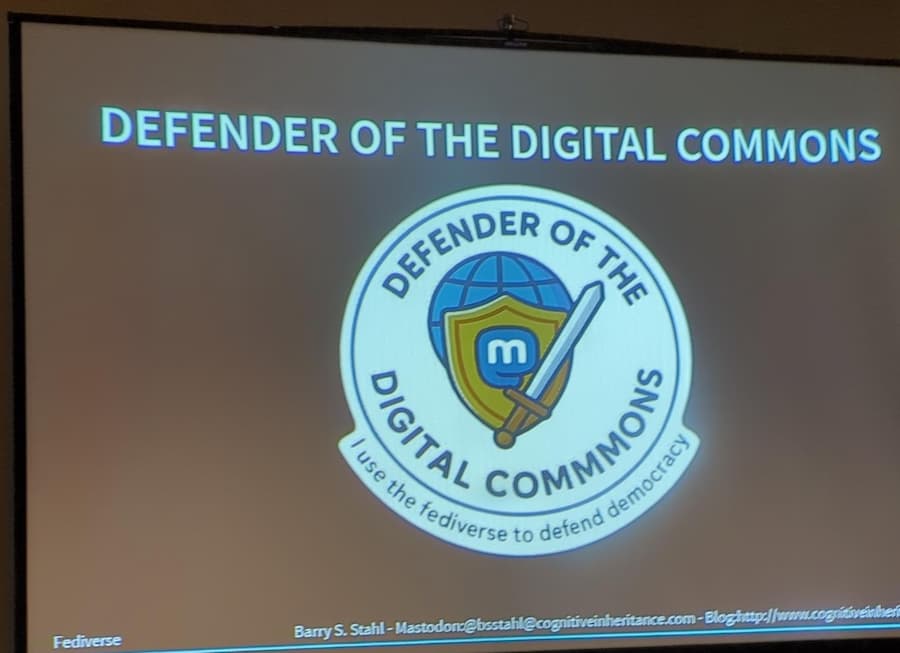
The FediVerse is important . Barry Stahl shared about Mastodon and the need for decentralized technology. The W3C Standards for Activity Pub and Activity Streams can enable this and be built upon. There are many challenges that we as developers could help overcome. “incentives are architectural => the fix must be architectural” I didn’t realize that Nostr was a different protocol (built on cryptography, maybe ). I need to learn more about both.
What’s Next For Me
I am going to work on combining the ideas from Cory and Alvindra to have a blueprint/guide for development with good guardrails. Hopefully, I can have skills and instructions for each step of the Software Development Life Cycle. These should help people ramp up more quickly and give feedback on what works and doesn’t work.
I’m curious how SpecKit will stand up or if we’ll replace it with skills from AiHero.dev or something else. These will probably all change in the next months, but foundations and first principles will stand.
Who knows how the usage of AI will turn out in the next year and years, but I will continue to learn and share what I learn.
Thanks for another great NE Code!
Check out my Resources Page for referrals that would help me.
Use Swan Bitcoin to onramp with low fees and automatic daily cost averaging and get $10 in BTC when you sign up.